IEM
IEM
  • Home
  • Services
    • Real Estate Inspection
    • Maintenance & Repairs
    • Bird Guard
    • Solar Panel Cleaning
  • Schedule
    • Call Now
    • Schedule
  • About & FAQ's
    • Meet Our Inspectors
    • FAQ & Helpful Links
    • Our Territory
    • Hot Spot Simulator
  • Realtor Info
    • Solar for Realtors
  • Blog
  • More
    • Home
    • Services
      • Real Estate Inspection
      • Maintenance & Repairs
      • Bird Guard
      • Solar Panel Cleaning
    • Schedule
      • Call Now
      • Schedule
    • About & FAQ's
      • Meet Our Inspectors
      • FAQ & Helpful Links
      • Our Territory
      • Hot Spot Simulator
    • Realtor Info
      • Solar for Realtors
    • Blog
  • Sign In
  • Create Account

  • My Account
  • Signed in as:

  • filler@godaddy.com


  • My Account
  • Sign out

Signed in as:

filler@godaddy.com
  • Home
  • Services
    • Real Estate Inspection
    • Maintenance & Repairs
    • Bird Guard
    • Solar Panel Cleaning
  • Schedule
    • Call Now
    • Schedule
  • About & FAQ's
    • Meet Our Inspectors
    • FAQ & Helpful Links
    • Our Territory
    • Hot Spot Simulator
  • Realtor Info
    • Solar for Realtors
  • Blog

Account

  • My Account
  • Sign out

  • Sign In
  • My Account

Understanding Solar Panel Hot Spots: Causes, Impacts, and So

What Exactly is a Hot Spot?

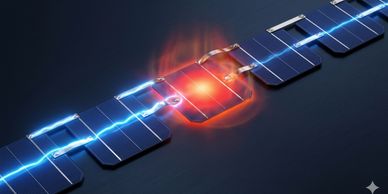
Illustration of electrical current flowing through solar cells with a hotspot.

 Solar cells are wired together in a series, like links in a chain. When a single cell gets shaded or damaged, it acts like a bottleneck. The healthy cells keep pushing power, but the bad cell resists it. This resistance generates intense, concentrated heat, creating a "hot spot."
Mild Hot Spots (The Hidden Drain)

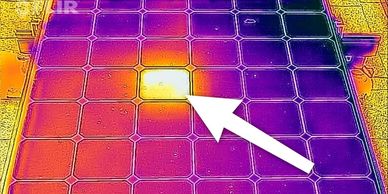
Thermal image of a solar panel with a hot spot highlighted by an arrow.

 Minor shading or small micro-cracks create mild hot spots. The cell heats up, dropping that string's current by roughly 25-30%. Because the voltage drop isn't high enough to trigger the panel's safety mechanisms, the panel limps along, quietly losing power without you noticing.

Severe Hot Spots (Bypass Trigger)

Thermal image showing heat distribution on a grid surface at 101.7°F.

 Heavy shade or a broken cell creates a severe roadblock. To prevent a fire or permanent damage, the panel's built-in "bypass diode" activates. This acts as a detour, routing power safely around the bad cell—but it instantly kills 33% of a standard panel’s total production.
Common External Causes

Common External Causes

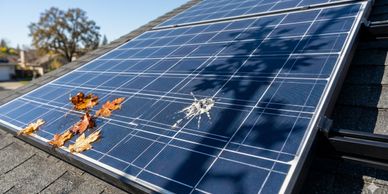
Solar panel with a visible crack and some autumn leaves on it.

 Hot spots rarely appear out of nowhere. They are most frequently caused by hard shadows cast by nearby trees, chimneys, and roof vents during peak sun hours. Localized soiling, like stubborn bird droppings or wet leaves stuck to the glass, are also major culprits.
Hidden Internal Damage

Common External Causes

Hidden Internal Damage

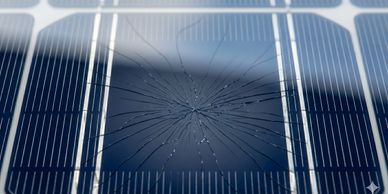
Close-up of a cracked solar panel with radial fractures.

 Sometimes the cause is completely invisible to the naked eye. Micro-cracks in the silicon cells caused by manufacturing defects, improper handling during installation, or severe hail can cause significant hot spots. Voltage leaks (PID) can also degrade cell performance over time.
Detection & Prevention

Common External Causes

Hidden Internal Damage

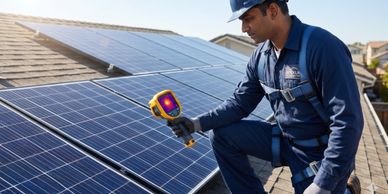
 Because mild hot spots are hard to see on a standard inverter app, the gold standard for detection is thermal imaging (Thermography). Trimming trees, regular cleaning, and professional thermal inspections ensure your system produces maximum, clean energy for decades.

Hot Spot Simulator

Solar Panel Temperature Guide

Copyright © 2024 Rocklin Solar Repair - All Rights Reserved.

6518 Lonetree Blvd #2050 Rocklin, CA 95765


Powered by

  • Home
  • Real Estate Inspection
  • SolarCheck Pro